
Web design for landscapers: what actually wins jobs
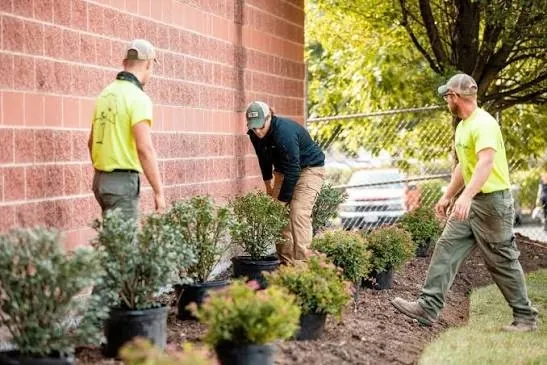
Good web design for landscapers has almost nothing to do with looking fancy and everything to do with turning a curious homeowner into a booked job. I’ve built plenty of these sites, and the ones that work all share the same handful of qualities. If you’re shopping for web design services for landscaping companies, or thinking about redoing your own site, here’s what actually matters.
Your website has one job
Let’s be clear about the goal. A landscaper’s website isn’t an online brochure and it isn’t an art project. Its one job is to take someone who found you, on Google, from a referral, off a truck decal, and turn them into a phone call or a quote request. Every design decision should serve that. If a gorgeous site doesn’t generate enquiries, it’s a failure, no matter how nice the photos look.
That framing changes everything. Instead of asking “does this look good,” you ask “does this make a homeowner want to call me?” Those are very different questions, and web design for landscapers lives or dies on the second one.
Real photos of your work beat everything
Here’s the single biggest advantage a landscaper has online: your work is beautiful, and it photographs well. A tired lawn transformed into a crisp, striped showpiece, a bare yard turned into a paver patio with a fire pit, these before-and-afters are the most persuasive thing you can put on a website. They’re proof, they’re local, and no competitor can copy them.
So the best web design services for landscaping companies build the whole site around your project galleries. Big, real photos, front and centre. Not stock images of generic gardens, your actual jobs. If an agency wants to fill your site with library photos of English cottage gardens you’d never build, they don’t understand how landscaping sells.
It has to work on a phone
Most of your visitors are on their phones, and a lot of them are literally standing in the yard they want fixed. If your site is slow, or if they have to pinch and zoom to read it, they’re gone before they see a single photo. Mobile-first isn’t a nice-to-have in this trade, it’s the majority of your traffic. Fast-loading, thumb-friendly design is the baseline every landscaping website has to clear.
Make it obvious what you do and where
A homeowner landing on your site should know within about three seconds exactly what you do and which areas you serve. “Landscaping and lawn care in [your town]” beats a clever tagline every time. Spell out your services, design and build, maintenance, hardscaping, whatever you offer, and list the towns and neighbourhoods you cover. Clarity books jobs. Vagueness sends people back to Google to find someone clearer.
The phone number and quote button belong everywhere
Don’t make people hunt for how to contact you. Your phone number should sit at the top of every page, tappable on mobile, and a simple “Get a free quote” button should follow the visitor as they scroll. Add a short quote form for the people who’d rather type than call. Every extra click between a interested homeowner and contacting you is a chance for them to give up. Good web design for landscapers removes those clicks.
Show that you can be trusted
Homeowners are letting you onto their property, so trust matters. The little signals do a lot of work: your Google reviews displayed on the site, years in business, any licences or insurance, the areas you serve, and a real photo of you and your crew rather than a faceless logo. Put these near your contact buttons, right where people are deciding whether to reach out. A landscaper who looks real and reviewed beats an anonymous one every time.
Web design services for landscaping companies should include SEO
A stunning website nobody can find is worthless. Proper web design services for landscaping companies build in local SEO from the start, sensible page structure, a page for each core service, location pages for the towns you serve, fast performance, and the technical basics Google looks for. This is what gets you showing up when someone searches “landscaper near me.” If an agency treats SEO as a separate upsell after the build, you’ll end up paying twice to fix a site that was never structured to rank.
Speed, security and the boring essentials
Behind the photos, a few unglamorous things keep the site earning: fast hosting, an SSL certificate so browsers don’t flag you as “not secure,” and a build that doesn’t break every time a browser updates. Homeowners judge quietly, a slow or insecure site makes them wonder whether you cut corners on the actual work too. The essentials aren’t exciting, but skipping them costs you jobs.
What it should cost
Web design for landscapers ranges from cheap template sites to fully custom builds. You don’t need the most expensive option, but the cheapest, a five-minute template with stock photos and no SEO, usually can’t do the one job that matters. Think of it as buying a salesperson that works 24/7: a few hundred to a few thousand for the build, depending on scope, is normal, and a site that books even one extra job a month pays for itself quickly. Just make sure you own the domain and the site when it’s done.
DIY, freelancer, or specialist?
You can build it yourself on a website builder, and some landscapers do fine that way to start. But it eats time you don’t have in season, and DIY sites rarely rank or convert as well. A general freelancer is cheap but may not understand the trade. Web design services for landscaping companies, from someone who builds for this industry, cost more but come with the galleries, local SEO and conversion know-how baked in. For most growing landscapers, that specialist route pays for itself.
The bottom line
Great web design for landscapers is simple, not fancy: real photos of your work, fast and flawless on mobile, crystal-clear about what you do and where, easy to contact from every page, stacked with trust signals, and built to rank. Get those right and your website quietly books jobs while you’re out on site. Get them wrong and it’s just an expensive digital business card.
Location pages: the SEO trick most landscapers miss
Here’s a practical tactic that punches well above its weight. If you serve five towns, don’t cram them all onto one page, build a dedicated page for each: “Landscaping in [Town A],” “Landscaping in [Town B],” and so on. Each page speaks to that specific area, mentions local landmarks or neighbourhoods, and shows work you’ve done nearby. Google rewards this because it can clearly see you serve each place, and homeowners in those towns feel like you’re local to them. Most landscaper websites skip this entirely, which means doing it well is an easy way to out-rank competitors who didn’t bother.
Before-and-after galleries done right
Your galleries are your best salesperson, so treat them properly. Group photos by project, not in one giant jumble, so a homeowner can see a whole job from tired to transformed. Lead with the strongest transformations. Add a line of context to each, what the client wanted, what you did, so it reads as a story rather than a photo dump. And keep them current: a gallery that stopped two years ago quietly suggests the business did too. A well-built gallery turns browsers into believers faster than any amount of clever copy.
Common mistakes landscapers make with their website
- Using stock photos instead of their own real work.
- Hiding the phone number, or having no clear call to action.
- A slow site that takes forever to load the big photos.
- No location or service pages, so they never rank locally.
- Letting it go stale, no new projects, outdated info, dead links.
Any one of these leaks jobs. Together, they turn a website into an expensive ornament. The fix is rarely a total rebuild, it’s usually tightening these fundamentals so the site does the one job it’s there for.
Keeping the site working after launch
A landscaping website isn’t a “set it and forget it” job. The sites that keep bringing in work are the ones that get fed: fresh project photos every month or two, new reviews pulled through, the occasional new service or location page as you grow. It doesn’t take much, but a living site outranks and out-converts a frozen one every time. Whoever builds it should make updating it easy, either by giving you a simple way to do it or by handling it for you.
Signs your current site is costing you jobs
Not sure whether your site needs work? A few honest tells: it looks dated next to competitors, it’s slow or awkward on your phone, you can’t remember the last time it brought you a call, it doesn’t show up when you Google your own services, or you’re embarrassed to send people to it. Any of those means the site is working against you. In a trade where homeowners judge you online before they ever call, that’s money walking out the door every week.
Your website is the hub of everything
Think of your website as the centre of your marketing, not one channel among many. Your Google Business Profile links to it, your social posts point to it, your ads land on it, your truck decals and flyers send people to it. That means every other bit of marketing you do is only as good as the site it feeds. A weak website quietly leaks all of that hard-won attention. A strong one converts it into calls. Get the hub right and everything else starts working harder, which is exactly why web design for landscapers is the first thing worth fixing, not the last item on the list.
Don’t rely on social media alone
Plenty of landscapers lean entirely on a Facebook or Instagram page and skip a real website. It feels easier, but it’s a trap. You don’t own those platforms, an algorithm decides who sees you, and you can’t rank on Google with a social profile the way you can with a proper site. Social is brilliant for showing off finished work and staying visible between jobs, but it should point back to a website you actually control. The two work together: social catches the attention, and the website turns that attention into a booked job.
Your work sells itself, your website just has to get out of the way. I build websites for landscapers and contractors designed to turn visitors into booked jobs, galleries, local SEO and all. Tell me about your business and I’ll make you a free mockup so you can see it before spending a penny.